Reaching your 60s is a significant milestone, but it doesn’t mean slowing down or giving up the activities you enjoy. In fact, staying physically active during this stage of life is one of the most effective ways to maintain your health, independence and overall quality of life. Whether you’re newly retired, still working or enjoying more free time with family, remaining active can help you continue doing the things that matter most.
Many people believe that exercise becomes more difficult with age. While your body naturally changes over time, regular movement remains one of the most powerful tools for supporting healthy ageing. The key is finding activities that suit your fitness level, interests and lifestyle rather than trying to keep up with routines designed for younger adults.
At LiveBeyond100Years, we believe healthy ageing is about making sustainable choices that keep you moving, confident and independent for years to come.
Why Staying Active Matters More After 60?
Physical activity supports almost every system in the body.
Regular movement helps strengthen muscles, maintain bone health, improve balance and support heart health. It can also enhance flexibility, reduce stiffness and make everyday tasks such as climbing stairs, carrying shopping or gardening much easier.
Beyond physical benefits, staying active positively affects mental wellbeing. Exercise has been shown to improve mood, reduce stress, support better sleep and help maintain cognitive function as we age.
Remaining active isn’t about achieving peak athletic performance-it’s about protecting your independence and continuing to enjoy life.
Common Barriers to Exercise
Many adults want to be more active but face challenges that make getting started feel difficult.
Joint pain, previous injuries, reduced confidence or concerns about safety often discourage people from exercising regularly. Others simply don’t know which activities are appropriate for their age or fitness level.
It’s important to remember that staying active doesn’t always mean joining a gym or completing intense workouts.
Walking, swimming, gardening, dancing and gentle strength exercises all contribute towards better health and can be adapted to suit individual abilities.
Simple Ways to Stay Active Every Week
The best exercise routine is one you genuinely enjoy and can maintain consistently.
Healthy habits to include in your weekly routine include:
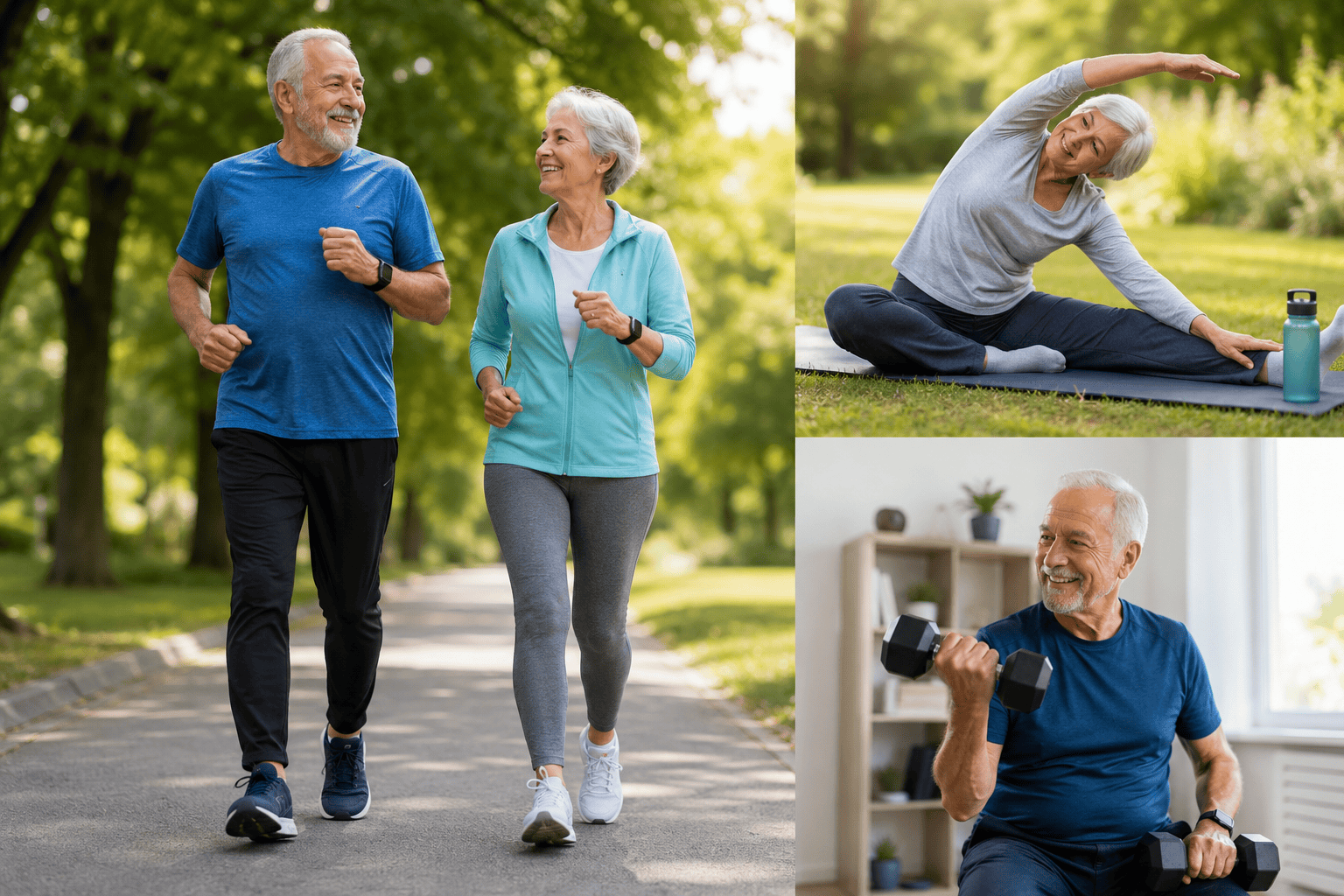
- Walking regularly to improve heart health, endurance and mobility.
- Performing light strength exercises to maintain muscle and bone health.
- Practising balance activities such as tai chi or gentle yoga.
- Stretching regularly to improve flexibility and reduce stiffness.
- Taking opportunities to move throughout the day instead of sitting for long periods.
These activities don’t require expensive equipment and can often be incorporated into your everyday routine.
Strength Is Just as Important as Cardio
Many people focus on walking alone, but maintaining muscle strength becomes increasingly important during your 60s.
Age-related muscle loss, known as sarcopenia, can gradually reduce strength and balance if left unaddressed. Resistance exercises help slow this process by encouraging muscles to remain active.
Strength training doesn’t necessarily involve lifting heavy weights. Resistance bands, bodyweight exercises or light dumbbells can all help improve muscle strength safely when performed correctly.
Combined with regular walking or cycling, strength training creates a balanced approach to healthy ageing.
Staying Active in Everyday Life
Exercise isn’t limited to scheduled workout sessions.
Everyday movement also contributes significantly to your overall activity levels.
For example, choosing the stairs instead of the lift, walking to local shops, doing household chores, gardening or playing with grandchildren all increase daily movement.
Many people find it easier to stay active when physical activity becomes part of their normal routine rather than something they feel obligated to do.
Consistency is far more valuable than occasional intense exercise.
A Real-Life Example
After retiring at the age of 63, one former teacher realised they had become far less active than expected. Without the routine of commuting and moving around school throughout the day, most hours were spent sitting at home.
Rather than joining an intensive fitness programme, they introduced small changes. Morning walks became part of their daily schedule, they joined a local swimming group twice a week and completed simple strength exercises at home using resistance bands.
Six months later, they noticed improvements in stamina, balance and confidence. Activities that once felt tiring became enjoyable again, and they found themselves spending more time outdoors with family and friends.
Their experience demonstrates that meaningful progress often comes from consistent habits rather than dramatic lifestyle changes.
Nutrition Supports an Active Lifestyle
Physical activity works best when combined with balanced nutrition.
As we age, our bodies continue to need adequate protein to support muscle maintenance and recovery. Fruits, vegetables, whole grains and healthy fats provide essential nutrients that contribute to overall wellbeing.
Staying hydrated is equally important, particularly because the body’s ability to recognise thirst may decline with age.
Rather than following restrictive diets, aim for balanced meals that provide sustained energy throughout the day.
Good nutrition and regular movement complement each other, helping you remain active for longer.
When to Speak with a Healthcare Professional?
Most adults benefit from increasing their physical activity, but certain medical conditions may require tailored advice.
If you’ve recently experienced surgery, ongoing joint pain, heart problems or other long-term health conditions, discussing exercise plans with a healthcare professional is sensible before significantly increasing activity levels.
Similarly, if you experience dizziness, chest pain or unusual shortness of breath during exercise, seek medical advice promptly.
Starting gradually and progressing safely is often the best approach.
Healthy Ageing Is About Staying Independent
Remaining active during your 60s isn’t about trying to turn back the clock.
It’s about preserving your mobility, confidence and ability to continue enjoying everyday life without unnecessary limitations.
Regular movement supports independence by helping you maintain the strength and balance needed for daily activities while also improving mental wellbeing and social engagement.
At LiveBeyond100Years, we encourage people to focus on lifelong habits rather than temporary fitness challenges. Every walk, stretch and strength session is an investment in your future health.
Frequently Asked Questions?
How much exercise should someone in their 60s do?
Most adults benefit from regular aerobic activity combined with muscle-strengthening exercises at least twice a week, depending on their health and ability.
Is walking enough to stay healthy?
Walking provides excellent cardiovascular benefits, but adding strength and balance exercises creates a more complete fitness routine.
Can I start exercising if I’ve never been active before?
Yes. Many people begin becoming more active later in life by starting slowly and gradually increasing activity levels.
What are the safest exercises after 60?
Walking, swimming, cycling, yoga, tai chi and light resistance training are popular options, although the most suitable activities depend on individual health and fitness.
Does exercise improve mental wellbeing?
Yes. Regular physical activity is associated with improved mood, better sleep, reduced stress and enhanced overall quality of life.